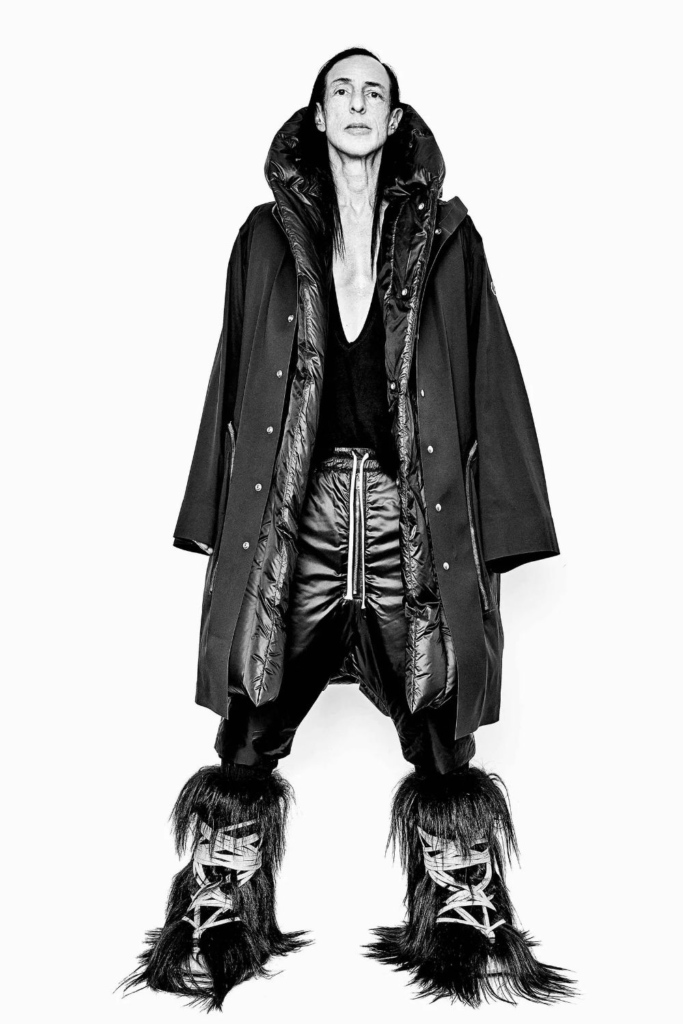
If fashion had a villain origin story, it might start with Rick Owens. Step into one of his runway shows and you immediately feel it: the mood is darker, the silhouettes are stranger, and the future somehow feels both intimidating and exciting. But the aesthetic that fans recognize today isn’t just a “look”—it is a fully realized world that critics and editors have crowned the “Dark Future of Fashion.”
The start
Owens began building this universe in the early 1990s, long before the industry understood his direction. Instead of following traditional luxury rules, he blended elements of underground culture, brutalist architecture, and dystopian science fiction. As noted by fashion critics, his work has earned him the moniker “The Lord of Darkness,” transforming avant-garde wear from a niche subculture into a universally desired luxury aesthetic
A Wardrobe for the Apocalypse
Take a look at his recent output. The sharp shoulders, extended sleeves, and sculptural shapes look less like clothing and more like armor for the end of the world. His color palette remains famously minimal—mostly blacks, greys, and earthy tones—but as he proved in his recent collections, this simplicity is a canvas for “futuristic rebellion”.
Owens owns the dystopian lane so completely that major publications now use the word as a synonym for his brand. For his Spring 2024 collection, Fashionista described the runway as a “dystopian fantasy” and an “Orwellian feast for the eyes,” featuring models with chilling black contact lenses and utilitarian textiles that felt sci-fi ready.
The Runway as Performance Art
His runway shows have become legendary performance art. In January 2025, Owens turned the Palais de Tokyo into a “stark, industrial stage” where strobe lights cut through the darkness like “futuristic prison bars.” Models marched in towering platform boots and oversized collars, creating an aesthetic that the Associated Press called “alien-like, imposing but surreal”.
He even brings this energy into his private life. For his Fall/Winter 2024 “Porterville” collection, he rejected a traditional venue entirely, instead inviting guests into his own home—a brutalist, three-story “concrete palace” in Paris. Guests watched as models navigated his actual living space, wearing inflatable boots and leather ensembles that looked like they belonged in a different timeline.
Ancient Future
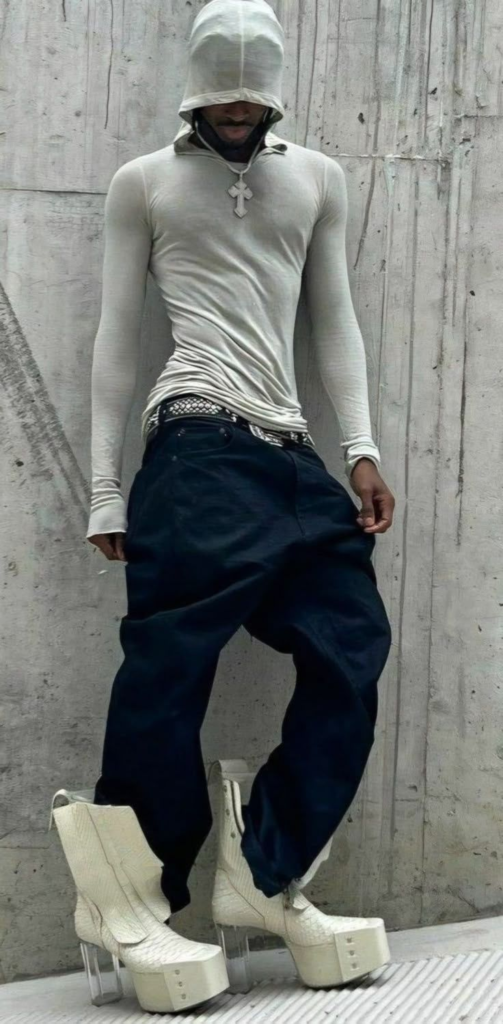
The secret behind this futuristic vibe is that Owens often looks backward to move forward. He mixes “ancient ritual and futuristic rebellion,” blending the draping of ancient statues with the severity of brutalist architecture. When historical inspirations collide with experimental tailoring, you get clothing that feels strangely timeless—or as Highsnobiety put it, “brutalist glamour on the edge of apocalypse”.
So the next time you see a pair of his towering “Kiss” boots or a dramatic oversized coat, remember—it’s not just fashion. It’s a carefully built universe where the past and future collide. Rick Owens doesn’t just design for the future; he is actively dressing us for the beautiful, dark unknown.
articles:
Why Rick Owens Owns “Dystopian” Fashion
The “Lord of Darkness” Title: The industry has officially adopted this nickname, with Vogue and other major outlets using it to describe his “architectural silhouettes” and “near-religious devoutness to black”.
The 2025 “Industrial” Vision: His January 2025 show was widely reported as a “bold dystopian vision,” solidifying that even decades into his career, he is still the primary driver of this aesthetic in high fashion.
Home as a Bunker: By hosting the FW24 show in his own “bunker-style” home, he proved that the dystopian aesthetic isn’t just a runway gimmick—it is his actual lifestyle.
Celebrity Endorsement: Cultural icons like FKA Twigs attend his shows in “dystopian chic” looks, further embedding his work into the pop-culture understanding of the genre.