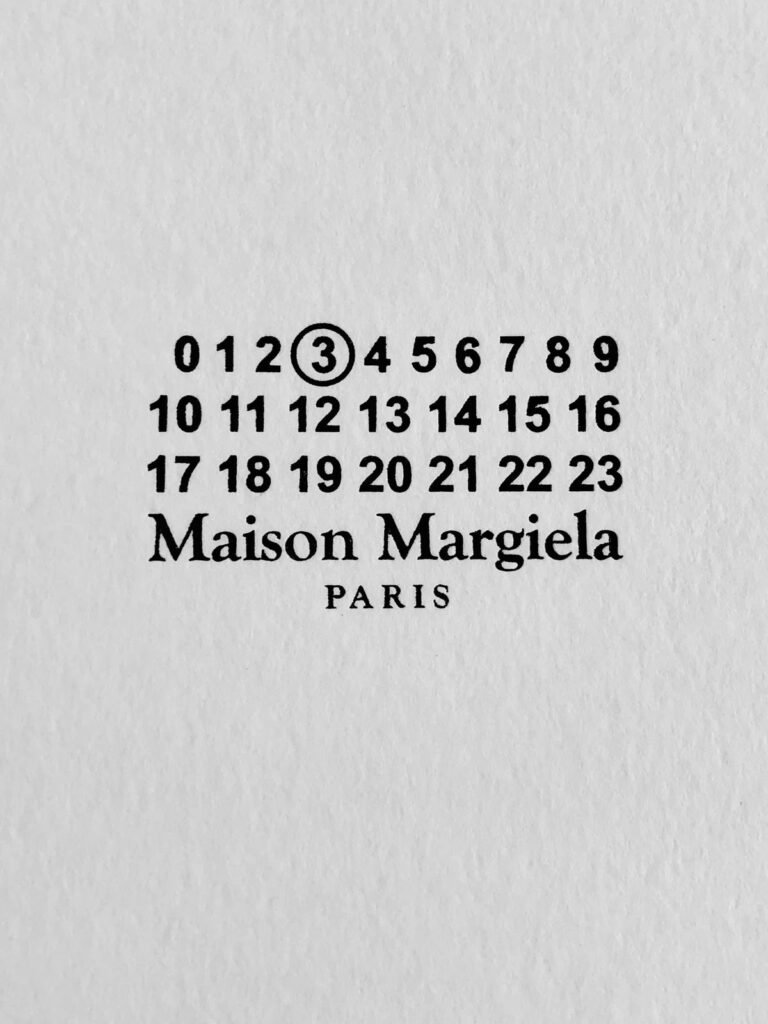
In a landscape dominated by loud logos and celebrity designers, Maison Margiela remains a masterclass in restraint. Founded in 1988 by the elusive Martin Margiela, the house redefined luxury by shifting the focus from the “persona” to the “garment.”
The Philosophy: Meaning in the Absence
The core meaning of the brand is rooted in anonymity. Martin Margiela famously avoided interviews and never appeared at the end of his runway shows. This was a deliberate choice to ensure the audience engaged entirely with the craftsmanship rather than the cult of personality.
Even the iconic “four white stitches” on the back of Margiela pieces had a functional origin: they were designed to be easily snipped off, allowing the clothing to remain completely unbranded and the wearer to remain anonymous.
Behind the Making: The Art of Deconstruction
The process behind the making of a Margiela collection often involves “deconstruction”—the act of stripping a garment down to its raw elements and reassembling it.
- Upcycling: Margiela was a pioneer of using found objects, transforming everything from vintage gloves to broken porcelain into high-fashion silhouettes.
- The Artisanal Line: Known as “Line 0,” these pieces are handcrafted from repurposed materials, emphasizing the beauty of imperfection and history.
- The White Blouse Blanche: To emphasize the “collective” over the “individual,” the design team wears matching white coats, similar to those worn by laboratory technicians or traditional couture atelier workers.
The Numbering System
Instead of a standard brand name, the labels feature a grid of numbers from 0 to 23. A circle around a specific number indicates the category. For example, (1) represents the Women’s Collection, while (11) is reserved for Accessories. This logical, almost scientific approach bypasses traditional marketing entirely.
Discussion Point:
In an era of heavy logomania, does a brand become more or less valuable when it actively hides its identity?